(this post originally appeared Feb. 21, 2012 on the blog Designed Nostalgia)
by Adam A. Aton
In 2002, with US invasion forces chomping at the bit, Saddam Hussein flung open the doors of Abu Ghraib and loosed Iraq’s most dangerous criminals on Baghdad.
Hussein was telling the people one thing: Remember why I’m here, and remember what could happen if I go away. In large part, he was vindicated. When coalition forces swept Hussein aside, they discovered the pulsing sectarian tensions he worked so hard (and so violently) to tame—tensions that began expressing themselves through teenage suicide bombers and roadside IEDs—tensions that were still raw when the U.S. left Iraq, eight years later.
Syrian President Bashar al-Assad, facing a serious threat to his regime, took a page out of Saddam’s book. He too flung open the prison doors.
In December, Syria released Mustafa Setmariam Nasr from prison. Nasr, also known as the “mufti of murder”, is al-Qaida’s fourth-most senior leader. He planned the 1985 El Descanso restaurant bombing and the 2004 Madrid train bombings. Cambridge’s expert on Islamic affairs, Malise Ruthven, called Nasr “the most articulate exponent of the modern jihad and its most sophisticated strategies.” U.S. forces captured Nasr in 2005 while he was out buying breakfast in Pakistan, but a series of legal disputes kept him out of American prisons. Instead, authorities in his native Syria took him into custody.
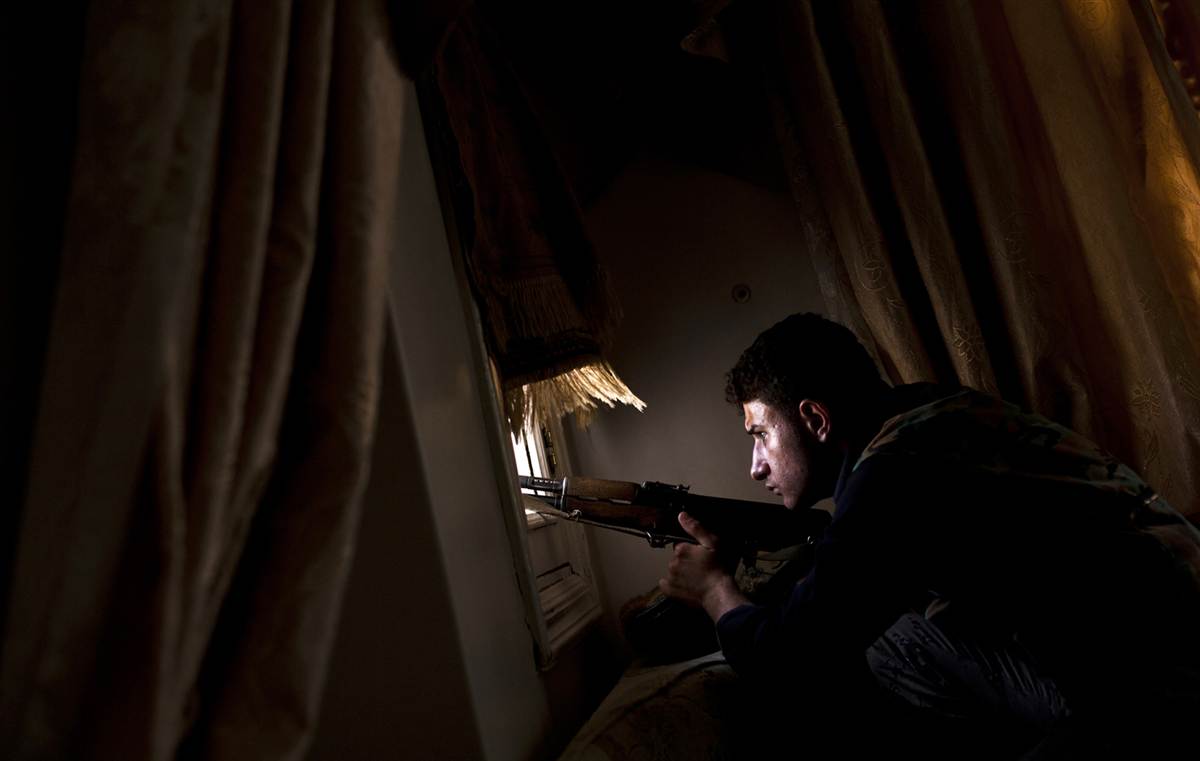
Since Nasr’s release, a string of suicide bombings has rocked the Syrian military. The handful of bombings has been more effective (i.e., killed more Syrian soldiers) than any other effort by the Syrian Free Army, and al-Qaida’s fingerprints are all over them.
At first glance, Syria’s release of Nasr looks like an act of desperation amid chaos. They’ve effectively handed the revolutionaries an ally who is experienced in insurgent combat and has access to all the resources of an international terrorism organization. Moreover, Syrian authorities should’ve known what Nasr would do off his leash. Lebanese officials have been saying since autumn that al-Qaida is smuggling weapons across the porous Lebanese-Syrian border to insurgents in Homs.
So why this self-inflicted wound? Syria’s actions make a bit more sense when compared to Libya just before NATO swooped in.
“Bin Laden… this is the enemy who is manipulating people,” Colonel Muammar Gaddafi said, “Do not be swayed by bin Laden.”
Assad thinks, as Gaddafi thought before him, that no matter how much the West hates dictators and genocide, al-Qaida is still enemy number one. If al-Qaida establishes a significant presence in Syria, then Assad can change the narrative. He becomes a force of stability, the last bulwark against state-sponsored terrorism1, instead of a dictator carving a bloody swath through once-peaceful protests. After all, America is no stranger to unsavory alliances with abusive rulers promising to curtail terrorism (or communism, depending on the era).
Although scapegoating al-Qaida failed Gaddafi, the tactic may prove more effective in Syria for a few reasons.
The first, of course, is that al-Qaida’s number-four running around the country. Syrian authorities may have released him, but he’s nonetheless a juicy target for NATO. He also lends al-Qaida’s presence a measure of gravity. It implies the organization would benefit from and is cheering for Assad’s fall—which it would and is. Assad is trying to manipulate America’s knee-jerk reaction to deny al-Qaida anything it wants.
Second, al-Qaida has been a concern in Syria before. Coalition forces long suspected al-Qaida fighters in Iraq came through the Syrian border, and documents found in the raid on bin Laden’s compound confirm as much.
Third, al-Qaida this month released their first video since bin Laden’s death. Ayman al-Zawahri, bin Laden’s replacement, calls for al-Qaida to join the Syrian protesters.
“Wounded Syria still bleeds day after day, while the butcher [Assad]…is not deterred to stop,” Zawahri said. “However, the resistance of our people in Syria is escalating and growing despite all the pains, sacrifices and blood… If we want freedom, we must be liberated from this regime. If we want justice, we must retaliate against this regime.”
Al-Qaida remained mum through the Libyan revolution, but this time they’re making a big deal about hopping on the Syrian bandwagon2.
Multiple spokesmen for the Free Syrian Army have denounced al-Qaida and denied any collusion, but that doesn’t mean al-Qaida isn’t among them. The FSA is a decentralized, leaderless group (“militia” is a stretch and “army” is laughable) with no formal ranks, embedded in besieged cities with the only combat experience concentrated in military deserters.
Will the West take the bait? Probably not, but Assad has bigger problems. Western leaders realize the only way to stop the televised horrorshow in Homs is changing the channel. But as the Syrian conflict drags into its second year with violence only increasing, some Middle Eastern countries — e.g. Turkey and Saudi Arabia— will begin thinking about what it means to share a region with a failed state.. If things deteriorate far enough, for long enough, the Arab League may even take it upon itself to intervene.
Footnotes:
1: State-sponsored terrorism aimed at Europe or America, at least. Syria has long supported organizations the U.S. considers terrorist, including Hamas, Hezbollah and a bevy of Palestinian groups.
2: Al-Qaida’s motives for jumping into the fray are more clear: after watching three regimes fall without their help at all, al-Qaida risks regional irrelevance if they abide another secular revolution.

 Adam Aton